Learning Vision Models by Building With My Kid

Mike Ludden
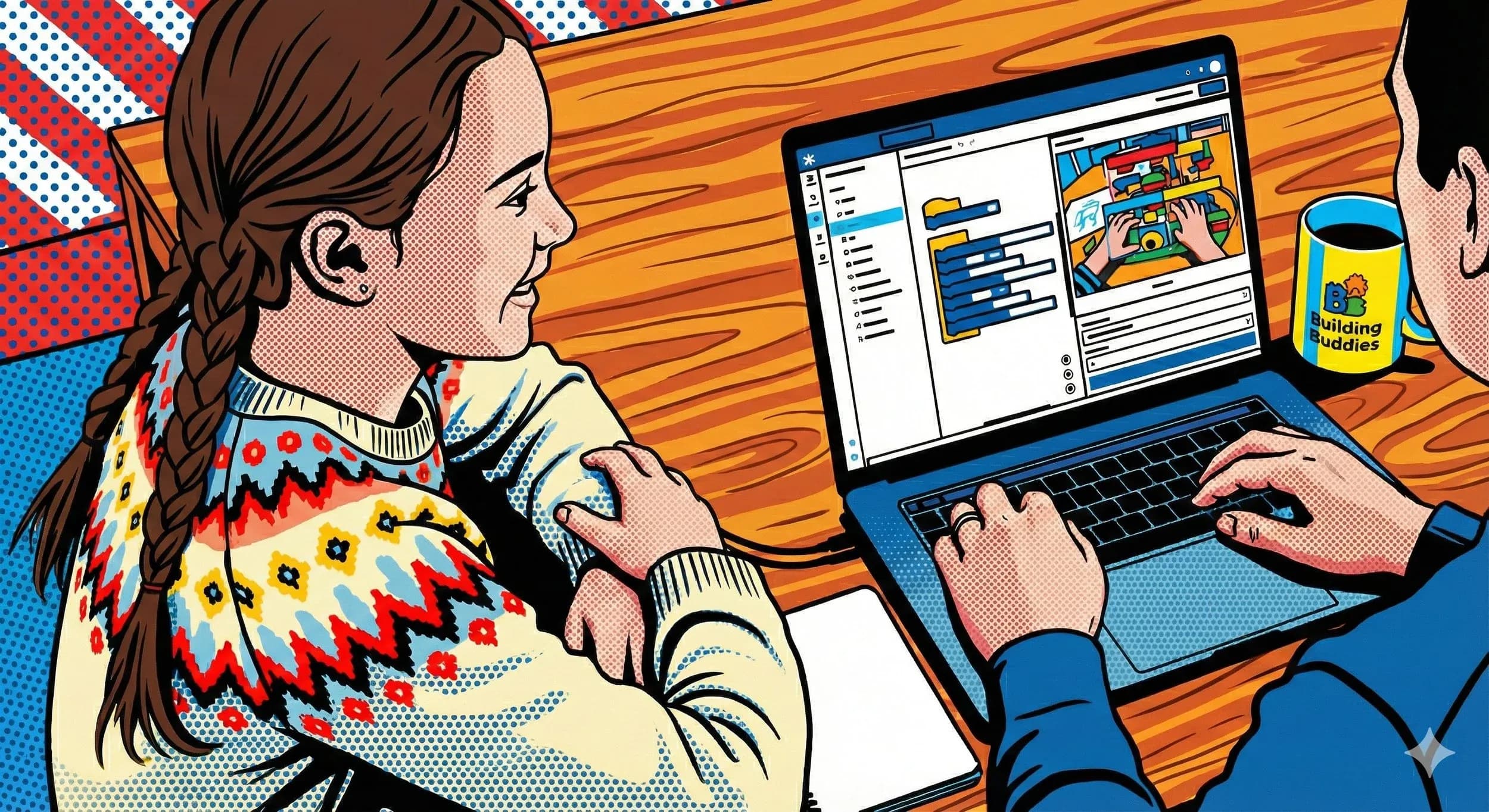
One of the easiest ways for me to learn new technology has always been to build something real with it. Not a demo. Not a throwaway script. Something that actually gets used.
Recently, I found myself wanting to go deeper on vision models and text-to-image systems. I understood the theory well enough, but I wanted to really internalize how these models behave, what they're good at, where they fall apart, and how small input changes affect outputs.
Instead of starting with a benchmark or a dataset, I started with a much smaller constraint: Could I explain this to my kid in a way that made sense?
Turning “what if?” into a product experiment
The initial idea was simple. My kid likes drawing, coloring, and making cards for people. She also likes coming up with wildly specific ideas (“a cat astronaut with a birthday cake”).
So we started playing with text-to-image prompts together. I handled the setup. She handled the creativity.
Very quickly, she started giving feedback that sounded suspiciously like product requirements:
- “It should be easier to color.”
- “You have to be able to rotate the text dad.”
- “Can it look more like a coloring page?”
- “Why isn't there a rainbow font?”
Without realizing it, we were doing exactly what I usually do at work! Iterating on features, tightening constraints, and shaping outputs toward a real use case.
Why vision models are easier to understand with kids
Kids are great at exposing gaps in abstractions. They don't care that something is “technically impressive.” They care whether it works for what they want to do.
Explaining why an image looked strange, or why a prompt produced unexpected results, forced me to reason about the model in clearer terms:
“The computer isn't seeing like you do, it's guessing based on patterns it's seen before.”
That framing ended up helping me too. It made it easier to reason about prompt structure, model limitations, and how to guide outputs toward simpler, more usable results.
From learning exercise to something real
At some point, this stopped feeling like a learning experiment and started feeling like something we actually wanted to use. The outcome of that process eventually became Scribbljoy — a small project focused on turning kids' ideas into printable, colorable art and cards.